



ByBeline
Opinion: Muhammed Krubally’s Success is a credit to him, but an indictment of the gambia’s failure on disability inclusion
Share your love
By Ousman A. Marong
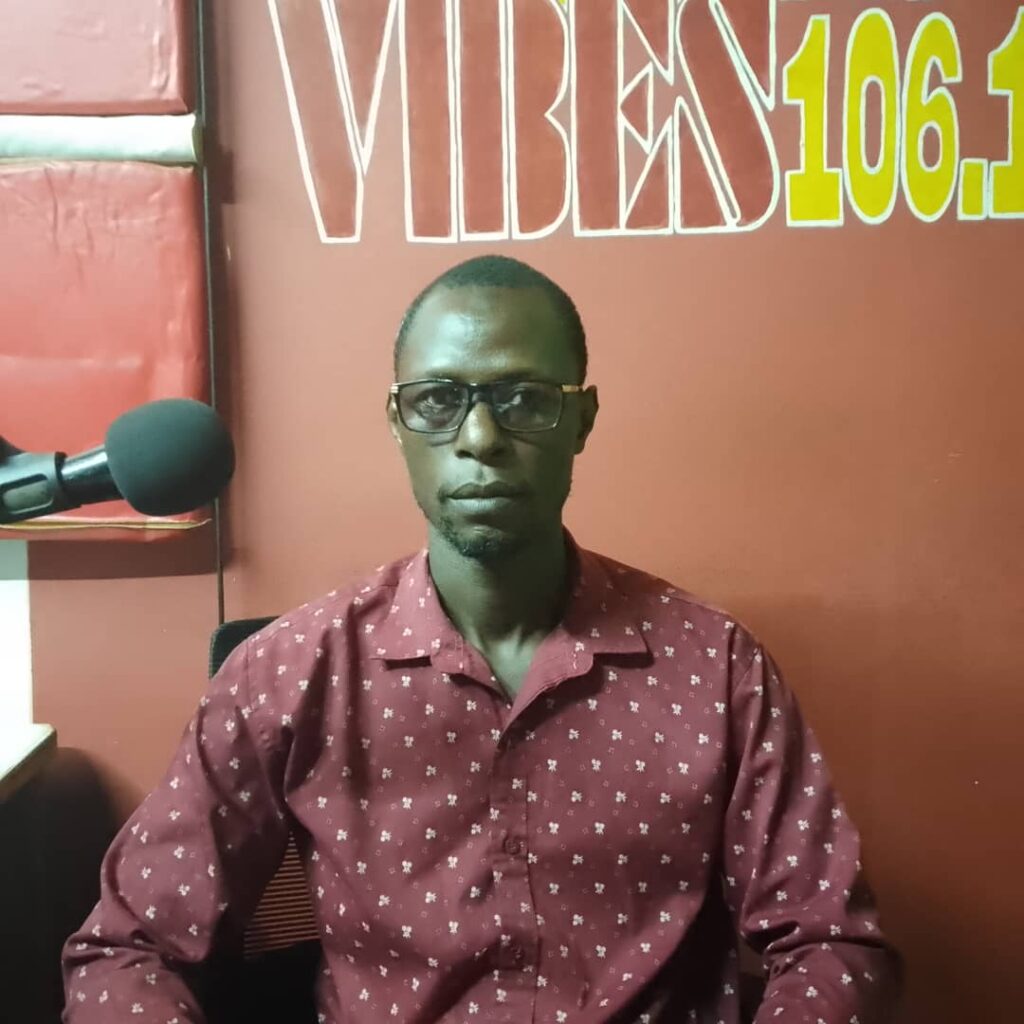
The journey of Magistrate Muhammed Krubally, The Gambia’s first visually impaired magistrate, fills us with national pride. Yet, it also shines a light on a troubling reality: while individuals with disabilities continue to showcase their talents, the systems designed to safeguard their rights are still grappling with the barriers that hold them back.
Since stepping into his role in 2016, Krubally has overseen more than 1,000 civil and criminal cases. Armed with screen-reading software and AI-powered smart glasses, he has proven that visual impairment doesn’t hinder someone from fulfilling demanding judicial duties.
However, his success prompts a crucial question: why do people with disabilities have to exert so much effort to validate their worth in a society that professes to champion equality?
In her report for Al Jazeera, journalist Kaddy Jawo highlights not just Krubally’s resilience but also the systemic challenges faced by individuals with disabilities in education, employment, and public services.
His story transcends personal achievement; it serves as a litmus test for The Gambia’s dedication to inclusion.
A law without enough impact
In 2021, The Gambia enacted the Persons with Disabilities Act, laying down a legal foundation for equality, accessibility, non-discrimination, and participation.
Yet, five years later, the realities reflected in Krubally’s narrative raise significant concerns about how effectively this law is being implemented.
At the Gambia Organisation of the Visually Impaired Resource Centre for the Blind, head of school Lamin Colley points out the lack of learning materials and the overwhelming demands placed on special-needs teachers. Often, a single teacher is tasked with supporting students across several schools, making consistent assistance a challenge.
This issue extends beyond just the education sector. It jeopardizes the future of children whose prospects are already limited by barriers that the Passing a law doesn’t automatically mean a right is protected. Without proper funding, trained staff, accessible resources, and accountability, disability legislation can end up being just a promise that falls short of reality.
The Ministry of Gender, Children and Social Welfare hasn’t responded to Al Jazeera’s inquiries about how the law is being implemented. The public deserves transparency regarding what has been accomplished, what still needs to be done, and how the government plans to bridge the gaps.
Representation doesn’t equal inclusion
Krubally’s situation isn’t a one-off case.
Former National Assembly member Ndey Yassin Secka-Sallah shared with Al Jazeera that she relied on her fellow parliamentarians to keep her updated on proceedings because she didn’t have the necessary tools to engage independently.
Her experience highlights a key contradiction in representation: someone can hold a public office yet still lack the means to participate fully.
This issue extends to the judiciary, schools, and workplaces. Simply opening doors for people with disabilities means little if they can’t access information, utilise facilities, or carry out their responsibilities on their own.
Inclusion isn’t about charity. It’s not a favour granted by colleagues or employers; it’s about equal rights and institutional accountability.
The judiciary, in particular, should set the standard. If we want justice to be accessible for everyone, court systems must adapt to accommodate both judicial officers and court users with disabilities.
The relevant authorities need to clarify what accommodations are available for Krubally and what steps are being taken to enhance accessibility in the broader justice system.
Stop celebrating resilience while ignoring responsibility
One risk in narratives like Krubally’s is that society tends to applaud individual perseverance while neglecting the systemic failures that necessitated such resilience.
Krubally encountered discouragement throughout his education, yet he pushed through. His achievements are commendable. However, not every child facing similar challenges will have the same resources or determination.
Some people will give up on their dreams, while others might never even get the chance to show what they can do.
It’s crucial for the country to stop using exceptional individuals as a way to prove that the system is functioning. Often, their successes highlight exactly where the system falls short.
The goal isn’t just to create more success stories for people with disabilities; it’s about building an environment where success isn’t tied to overcoming unnecessary institutional hurdles.
Technology plays a role, but it can’t replace good policy. Krubally’s use of assistive technology is a great example of how innovation can enhance independence and access to information. Similarly, Musa Barrow, a visually impaired lecturer, shared with Al Jazeera how digital tools have empowered him to read, write, and prepare his lecture notes.
These instances illustrate the importance of assistive technology However; technology alone won’t eradicate discrimination, fund specialized education, or transform inaccessible public institutions into inclusive spaces.
It’s essential for the government and employers to provide the right tools and reasonable accommodations while also tackling the attitudes and practices that marginalize people with disabilities.
Moreover, better data on disabilities is crucial. The article mentions that the 2013 census reported a disability prevalence of 1.2 percent, but its methodology might have downplayed the true extent of disability. Preliminary results from the 2024 census also failed to deliver detailed national disability data.
Without accurate information, policymakers struggle to understand needs, allocate resources effectively, or measure progress.
The government should make it a priority to gather more comprehensive disability data and share clear information regarding funding, accessibility improvements, educational support, and job opportunities.
The real measure of inclusion lies ahead. Muhammed Krubally has spent ten years proving that visual impairment doesn’t hinder professional excellence. The pressing question now is whether The Gambia’s institutions have taken lessons from his journey.
Can a visually impaired child receive quality education without facing unnecessary barriers? Can a qualified professional compete for employment without prejudice? Can a person with a disability participate independently in parliament, court proceedings and other public services?
These are the questions that matter more than ceremonial commitments to inclusion.
The Persons with Disabilities Act provides a foundation. What is needed now is stronger implementation, adequate funding and measurable accountability.
At the end of Al Jazeera’s report, Krubally reflects on the future with three hopeful words: “All I see is possibility.”
The country should share that optimism. But possibility will not build accessible schools, train specialist teachers or equip public institutions. Those outcomes require deliberate policy choices and sustained investment.
The Gambia must choose between celebrating individuals who overcome systemic barriers and dismantling those barriers for everyone who follows.
Krubally’s achievement should be a source of pride. But the ultimate measure of an inclusive society is not how loudly it celebrates one person’s success; it is how effectively it ensures that others have the same opportunity to succeed.
Until then, his story remains both an inspiration and an indictment: proof of what a determined individual can achieve, and a reminder of how much the system still needs to change.
